Xaman wallet is a self-custody gateway for XRP Ledger and Xahau accounts
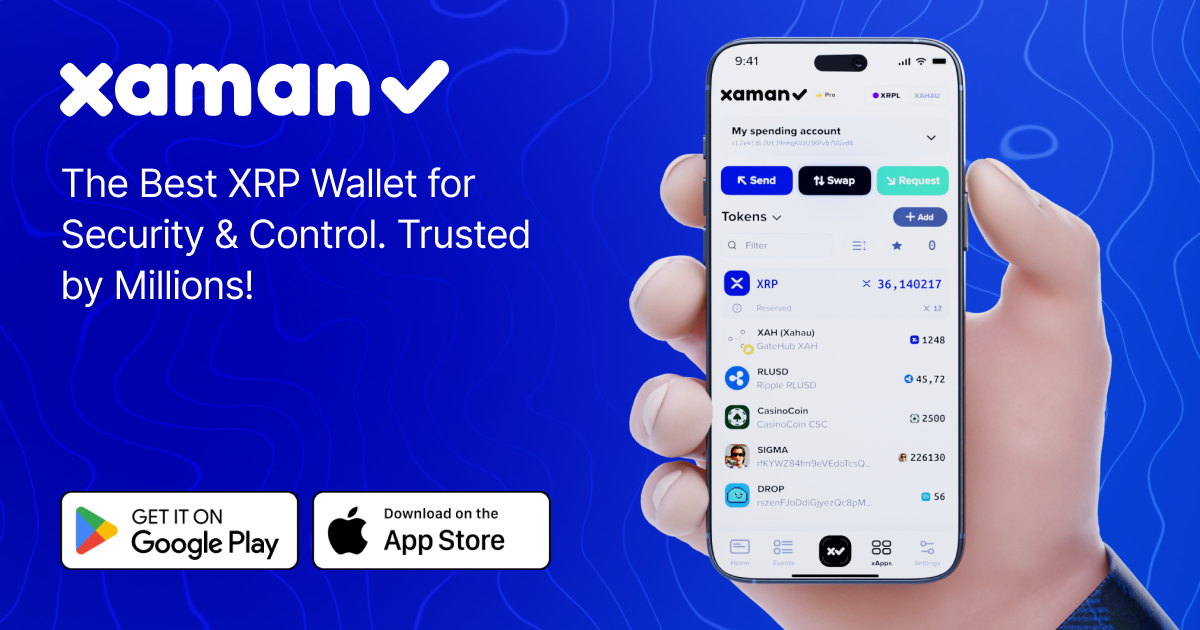
Xaman wallet is a mobile wallet for holding XRP Ledger and Xahau assets while keeping signing control on the user side through passcodes, fingerprint unlock, or Face ID. It focuses on XRP accounts, issued tokens, ecosystem sign-ins, and transaction approvals rather than broad multi-chain speculation. The app creates or imports accounts, shows signing requests before approval, and connects users to products built across the XRPL and Xahau ecosystems.
Accounts, tokens, and sign-ins in one XRPL app
For people holding XRP, issued currencies, NFTs, and Xahau assets, Xaman wallet works as the day-to-day control panel for accounts on those ledgers. It supports all assets available on XRP Ledger and Xahau, so balances do not live in a separate product account. They remain tied to the blockchain account controlled by the private key or card-backed key material.
The account model inside Xaman wallet follows the XRPL approach: an account exists on the network, XRP pays transaction costs, and trust lines represent many issued currencies. Users who manage several ledger accounts do not need a separate app profile for each one. The interface lets them create new accounts, import existing accounts, and switch between them while preserving the signing boundary for each address.
How signing works with passcode, biometrics, and previews
Every important action ends at a signing screen. A payment, trust line change, offer, app login, or other ledger instruction is prepared elsewhere, then the wallet displays the request so the user approves or rejects it. The passcode or biometric prompt unlocks signing locally; the approval creates a valid signature for the network.
This flow matters because XRP Ledger transactions settle quickly, with official Xaman materials describing 3 to 5 second settlement. Speed is useful only when the signer understands the request. The preview step gives the user a moment to confirm the destination, asset, amount, and account before the transaction leaves the phone.
XRPL and Xahau assets the wallet handles
The wallet is built around two closely related ecosystems. XRP Ledger is the established network for XRP payments, issued assets, decentralized exchange functions, and account-level features. Xahau extends the family with Hooks, which are small pieces of transaction logic attached to accounts on that network. Xaman wallet gives users one familiar mobile interface for both environments.
That scope keeps the app focused. A user does not add Ethereum, Bitcoin, or Solana to the same account list. The benefit is depth around XRPL concepts: account reserves, trust lines, issued token balances, sign-in requests from ecosystem apps, and fast ledger settlement all receive first-class treatment instead of being hidden behind a generic multi-chain layout.
Creating or importing an account without giving up custody
Adding an existing account to Xaman wallet means bringing in the credentials needed to sign for that ledger address. Creating a new account starts the same custody responsibility from scratch. The app does not turn the account into an exchange login; the user controls the key material and must keep recovery information or the paired card secure.
New users should expect one XRPL-specific requirement: an account needs XRP for network reserves and transaction fees. The reserve is a ledger rule, not an app subscription. Once the account is funded, the wallet becomes useful for payments, token holdings, DEX-related activity, and app connections that rely on signed XRPL requests.
Where XApps and ecosystem logins fit
Everyday use is where Xaman wallet feels different from a plain address viewer. Many XRPL products use the app as the signing layer for login and transaction approval. A site or service prepares an action, the phone receives the request, and the user authorizes it inside the wallet. That pattern keeps private signing on the device while letting ecosystem apps build richer experiences.
Developers benefit from the same model. Xaman provides libraries, infrastructure, documentation, and a developer console for builders who need reliable wallet connection flows. The user sees the practical side: fewer copy-paste address steps, clearer account selection, and a consistent approval screen across many products.
Tangem cards for NFC-based key storage
The Tangem card option extends Xaman wallet beyond app-only storage. These NFC cards integrate with the app and use an embedded chip to store private key material. The phone communicates with the card during signing, so the card becomes part of the approval process for users who want a more hardware-like custody setup while keeping the mobile workflow.
This setup suits people who value a physical signing object for larger balances or shared operational habits. It also changes the recovery mindset. The card must be protected like a key, and the user should understand how their backup cards or recovery arrangement work before moving meaningful funds.
Costs that come from networks, reserves, and app choices
XRPL and Xahau transactions require network fees paid by the account sending the transaction. The fee is separate from any app, exchange, token issuer, or third-party service charge connected to a particular action. Some products also require trust lines, account objects, or reserves, which tie up XRP according to ledger rules until those objects are removed.
Someone choosing Xaman wallet should distinguish three cost categories:
- Network transaction fees paid on XRP Ledger or Xahau.
- Account reserves required by ledger rules.
- Optional third-party service fees from apps, exchanges, or issuers.
- Hardware costs when purchasing Tangem cards.
- Token spreads or prices when trading through ecosystem services.
Security habits before each signature
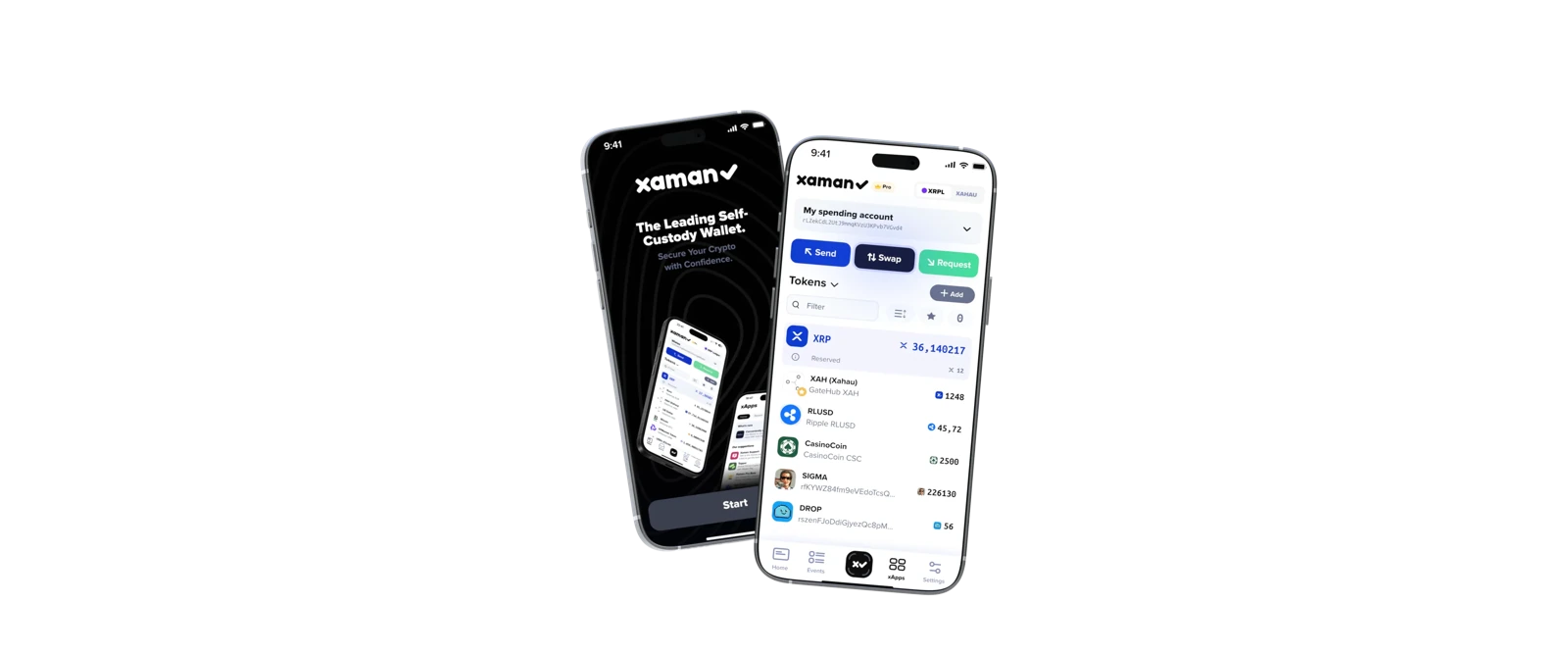
Security in Xaman wallet starts with self-custody and local approval, then depends on user attention. The app uses passcode and biometric access, presents transaction details before signing, and emphasizes an independently audited, security-first posture. Its public materials also point to a long operating record with no reported breach of the wallet infrastructure.
The highest-risk moment is the approval screen. A malicious or sloppy app cannot move funds without a valid signature, but a user who approves the wrong transaction still creates a real ledger action. Read the destination, amount, account, token issuer, and requested permissions before unlocking the signature.
When another wallet style fits better
A broad browser extension suits users whose main activity is EVM DeFi across Ethereum-compatible networks. A custodial exchange account suits someone who wants the exchange to handle keys, account funding, and order books inside one regulated platform account. A dedicated hardware wallet setup appeals to people who prefer offline signing flows and rarely interact with mobile ecosystem apps.
This app is strongest when the center of gravity is XRP Ledger or Xahau. It gives XRP holders a focused place to manage accounts, approve ecosystem requests, use biometric access, and connect with products built for these ledgers. That focus is the reason it remains a common wallet choice across XRPL users, token issuers, and builders who need a recognizable signing experience.
Before you start with Xaman wallet
Which phones support biometric access for this wallet?
The app is built for modern mobile use on iOS and Android, using device-supported biometric methods such as Face ID, fingerprint unlock, or equivalent system authentication where available. A passcode remains central to access. The exact biometric option depends on the phone hardware and operating system settings rather than the ledger account itself.
Recovering access after changing phones with Xaman
Recovery depends on how the account was secured. A software account requires the correct secret or recovery material to import the same XRPL or Xahau address on the new device. A Tangem-backed account requires the relevant card setup. Without the key material or card arrangement, self-custody gives no central support desk the power to recreate access.
Can the wallet manage both XRP and issued tokens together?
Yes. It is designed for XRP Ledger and Xahau accounts, so XRP and supported issued assets appear in the same account context. Issued tokens rely on ledger mechanics such as issuers and trust lines, while XRP pays network costs. The wallet presents these assets inside the account rather than turning them into a separate exchange balance.
Do I need a Tangem card to use Xaman?
No. The mobile app supports software-based self-custody with passcode or biometric access, and Tangem cards are an optional hardware-style upgrade. The card version adds NFC signing with key material stored in the card chip. Many users start with the app alone, then add cards when they want a physical signing object for stronger account separation.